
How Trump’s Tariffs Plan Actually Works, And Why $33B Today Isn’t the Endgame
America’s finally making money on trade, and Trump’s just getting started.

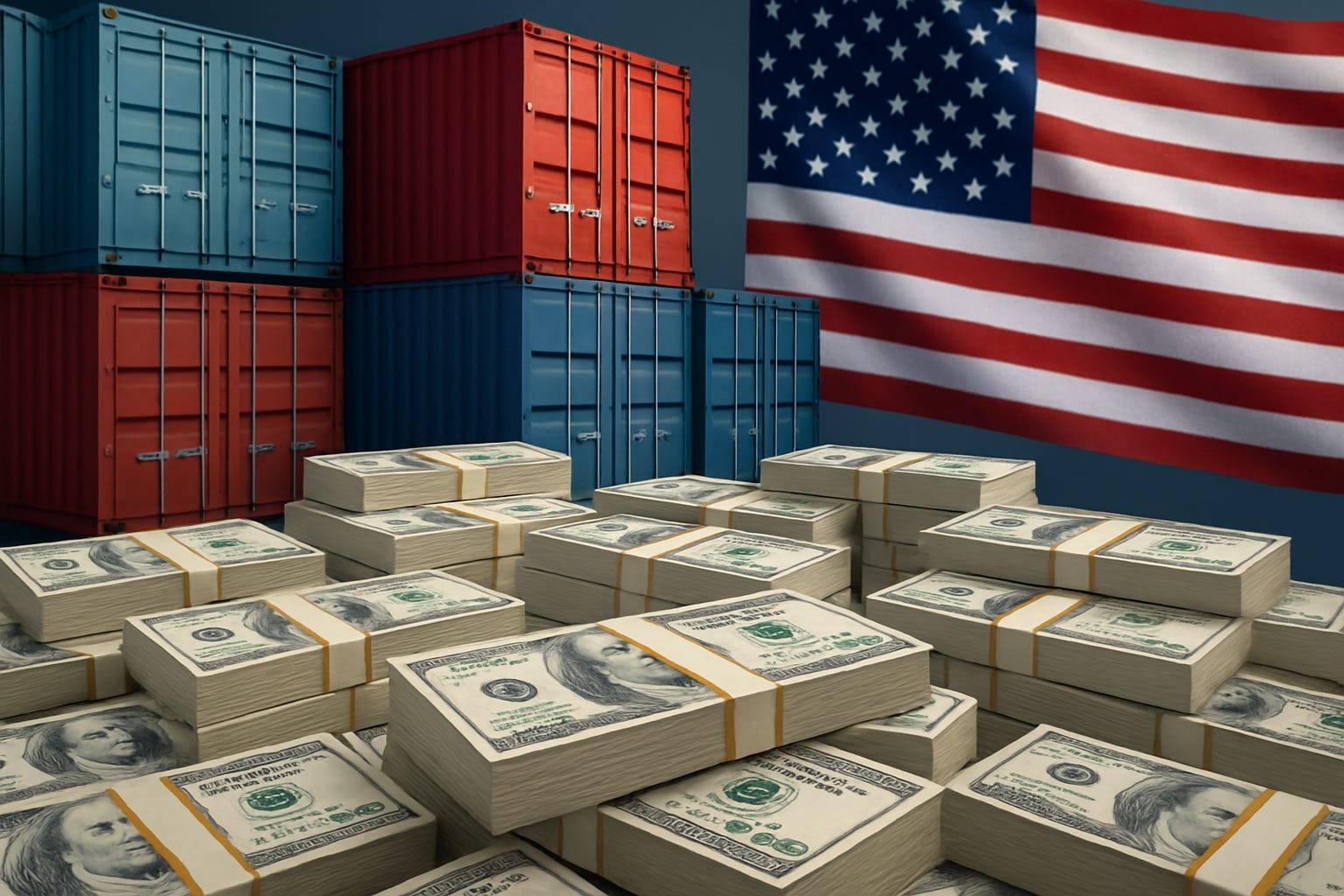
A lot of folks see the headline, “Trump collects $33 billion in tariffs in one month”, and instantly scoff:
“That’s not enough to replace the $2 trillion we collect from income taxes!”
True. Today. But that mindset misses the forest for the trees, and Donald Trump is playing the long game.
Here’s how this actually plays out if fully implemented, and why it could reshape America’s financial backbone for generations:
1. We’re the global piggy bank, and we’ve been suckers for decades.
Right now, the U.S. runs trade deficits with nearly every major economy, China, the EU, Mexico, Canada, Japan. They flood our markets with goods, often subsidized or dumped below cost, and in return, we send back… paper money.
Most of these countries tariff our exports far more aggressively than we tariff theirs.
Example:
China’s average tariff on U.S. goods? 20–25%
U.S. average on Chinese goods (pre-Trump)? 3–5%
Trump’s plan levels that out. He’s saying: if you want access to the most valuable consumer market in the world, you’re going to pay a price, just like we do.
2. Tariffs are immediate, automatic, and unavoidable revenue.
Unlike income tax, which requires:
• IRS staffing
• annual filings
• audits and enforcement
• political loopholes
…tariffs hit the moment foreign goods enter the country. No dodging, no accounting tricks, no billionaires hiding in tax shelters.
Every shipment at the port = a payment to America.
October 2025:
Gross customs revenue: $33.1 billion
Refunds/rebates: $1.7 billion
Net gain: $31.4 billion — a record.
That’s with baseline tariffs of 10–15% and just one year of tightening. Imagine scaling that across more goods, more countries, more enforcement.
3. The goal isn’t to just replace income tax — it’s to flip the whole incentive model.
Right now, the U.S. government taxes productivity (your paycheck) instead of parasitic imports (cheap Chinese junk).
Trump’s plan reverses that:
Reward domestic labor, punish foreign freeloaders.
Shrink the IRS, expand revenue from trade.
Use tariffs to fund the government, cut income tax for Americans.
He’s already floated cutting or eliminating federal income taxes for earners under $200,000, a majority of the working class.
4. Tariffs reduce reliance on foreign nations, and repatriate jobs.
Critics claim tariffs raise prices, but that assumes we keep buying everything from abroad.
The point of the policy is to incentivize American production:
If it costs 15% more to import a TV from China, guess what?
Someone will start making TVs in Ohio again.
We’re already seeing reshoring across steel, semiconductors, and auto parts. Tariffs fuel that, and the jobs that come with it.
5. It’s not about funding the government today, it’s about winning the future.
Imagine a future where:
You don’t pay income tax.
The federal government is funded by a tax on foreign exploitation, not American work.
Every time a Chinese-made product crosses our border, it pays you.
That’s the vision Trump’s laying out.
Yes, $33 billion in one month doesn’t replace $2 trillion in annual tax revenue. Yet.
But we didn’t build the income tax model overnight either. It took 110 years to corrupt the current system. We can build a better one faster.
Tariffs aren’t a gimmick, they’re a new foundation.
And Trump just laid the first brick.
A great explanation of the Tariffs/Inc9me Tax issue!!! I am definitely for Tariffs supporting Americans and 🇺🇸!!!
Americans have been brainwashed to expect instant gratification, especially the young. Playing the long game is the only way we win this.